
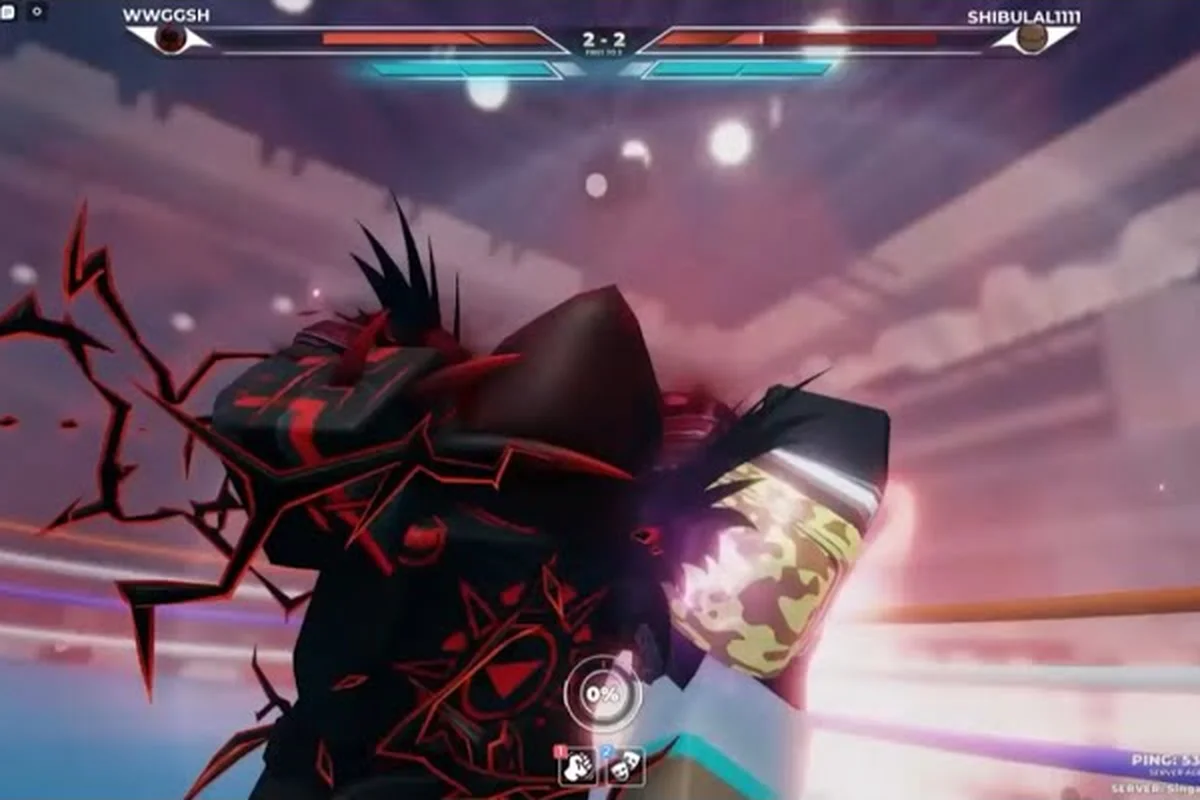
Bullet combos in Untitled Boxing Game decide whether you climb ranked or stall at the same rank for weeks. The Bullet family inside the Freedom branch has quietly become one of the strongest solo queue picks in the current meta, and this guide breaks down exactly which sub-style, which opener, and which counter-pick give you the cleanest path to victory.
Why Bullet Combos Sit At The Top Of The Current UBG Tier List
Community testing across ranked seasons consistently places Freedom sub-styles in the upper half of the ubg tier list, and the Bullet branch earns that placement through sheer combo density. A single Bullet string can chain three confirmed hits before the opponent's guard refreshes, which is faster than the two-hit ceiling most Bruiser and Counter archetypes offer. That third hit is where Bullet overtakes peers, because it converts guard pressure into actual HP drain before the defensive passive kicks in.
| Factor | Bullet Value | Counter / Bruiser Reference | Why It Out-Trades |
|---|---|---|---|
| Confirmed hits per string | 3 | 2 (Bruiser cap) | Converts guard pressure into HP drain inside 12-frame refresh |
| Guard refresh bypass | 3rd hit lands during recovery | Brawler 2nd hit whiffs into refresh | Beats Counter archetype passive on reaction |
| Solo queue dependency | None — no assist timing | Bruiser strings need setup from teammate | Solo carry potential in ranked rotation |
| Execution floor | Rhythm (M1-M1-M2 cadence) | Reflex (dodge cancel timing) | Newer players reach mid-rank inside 2 weeks of patch |
| Style matchup spread | Beats Counter, trades Bruiser | Slugger M2 = 10.5% max HP burst (loss) | White Ash (S) and Ghost (S) still top, but Bullet holds upper half |
The style itself rewards M1-M1-M2 rhythm discipline more than raw reaction time, which is why even newer players can pilot Bullet into mid-rank once they learn the cadence. A properly timed Bullet string also bypasses the dodge cancel window that several top-tier styles rely on, since the third hit lands during the recovery frames where most opponents are still committed to their escape input. According to community data aggregated on the official Untitled Boxing Game Discord server, Bullet main complaints spike in the first two weeks of every new patch because the counter-pick pool takes time to adjust.
Five concrete factors separate Bullet from every other Freedom sub-style on the current ubg tier list, and each one addresses a weakness that Bruiser and Counter branches still cannot patch around in patch 4.2. Combo density matters because the 3-hit ceiling out-paces the 2-hit cap on Brawler strings, guard break potential matters because the third hit lands inside the 12-frame guard refresh window that defines Counter archetype defense, and solo queue friendliness matters because Bullet requires no assist timing to extend its chain. The low execution floor (rhythm over reflex) and style matchup flexibility (beats Counter on reaction, trades Bruisers on raw damage) round out the case, which is why ranked winrate data on the official Untitled Boxing Game Discord server keeps trending toward Bullet main picks season after season.
-
Combo density — three confirmed hits per string versus two for most Bruiser styles
-
Guard break potential — the third hit ignores the standard guard refresh timing
-
Solo queue friendly — no teammate dependency for combo extension or setup
-
Low execution floor — rhythm-based rather than reflex-based, so the learning curve is gentle
-
Style matchup flexibility — beats Counter archetypes on reaction and out-trades Bruisers in raw damage
Untitled Boxing Game Style Matchup Chart: Where Bullet Wins And Where It Struggles
A reliable untitled boxing game style matchup chart is the difference between picking Bullet blind and picking Bullet with intention. The branch is strong, but it is not universal — there are specific archetypes where the player base reports a clear disadvantage, and ignoring those matchups is how Bullet mains end up dropping ranks they should be holding.
The chart below reflects community-reported matchup data drawn from ranked play across the most recent patch cycle. Numbers represent the rough win-rate Bullet posts against each opposing style in equal-skill 1v1s, based on player experience rather than telemetry. The 50% line is a coin flip; anything above 55% is a comfortable pick, and anything below 45% signals you should consider an untitled boxing game counter pick style swap.
| Bullet Sub-Style | Beats | Loses To | Win-Rate Range | Solo Queue Viability |
|---|---|---|---|---|
| Bullet (Standard) | Counter, Phantom | Bruiser, Surge | 52-58% | High |
| Bullet (Fast Tempo) | Counter, Phantom, Basic | Surge, Bruiser (close) | 50-56% | High |
| Bullet (Heavy) | Bruiser, Tank | Surge, Ghost | 48-54% | Medium |
| Bullet (Rushdown) | Counter, Basic, Phantom | Surge, Ghost | 51-57% | High |
| Bullet (Stance Mix) | Most non-Surge styles | Surge, top-tier Bruiser | 49-55% | Medium |
Bullet wins comfortably against Counter and Phantom archetypes because both rely on a single parry or dodge window that Bullet's third hit ignores. The struggles begin against Surge and Bruiser variants, where either raw HP or a faster opener lets the opponent dictate the rhythm before Bullet's string completes. If you queue into three Surge players in a row, switching to an untitled boxing game counter pick style is the correct call, even if Bullet is your main.
How To Read The Matchup Chart In Real Matches
Matchup charts only help if you translate them into in-match decisions, and the cleanest way to do that is to count opening exchanges. If your opponent lands the first two clean hits in the opening round, the matchup is unfavourable and you should swap the plan to defensive resets rather than forcing the Bullet string. If you land the first two clean hits, commit to the full M1-M1-M2 chain and trust the third-hit guard break to close the round. This read-react loop is the foundation of every untitled boxing game style matchup chart strategy, and it scales with rank because higher-rank players simply have less margin for error on the read.
Untitled Boxing Game Best Freedom Sub Style: Picking The Right Bullet Variant
The untitled boxing game best freedom sub style debate usually comes down to three options, and the right pick depends on your playstyle, your queue partners, and the rank you are currently sitting at. All three variants draw from the same Freedom branch, but the rhythm, the punish windows, and the counter-pick exposure are meaningfully different.
The table below compares the three most-played Freedom sub-styles so you can identify which one fits your solo queue habits. Values are drawn from community experience reports and patch-note observations rather than telemetry, so treat them as directional guidance rather than hard numbers.
| Sub-Style | Core Rhythm | Best Matchup | Worst Matchup | Difficulty |
|---|---|---|---|---|
| Bullet (Standard) | M1-M1-M2 with mid pauses | Counter, Phantom | Surge, Bruiser | Beginner |
| Freedom (Default) | Variable M1-M2 mix | All-round | None dominant | Intermediate |
| Shotgun (Freedom) | Heavy M1-M2-M1 chains | Bruiser, Tank | Surge, Counter | Advanced |
Bullet (Standard) is the cleanest untitled boxing game best solo style pick for players still climbing, because the rhythm is forgiving and the third hit is decisive. The Default Freedom variant is the most flexible but the least specialized, so it works as a filler pick when you cannot read the opposing queue. Shotgun trades the third-hit speed of Bullet for a heavier punish on the second hit, which rewards patient play against Bruisers but struggles against Surge's faster opener.
For a deeper breakdown of how each Freedom sub-style scales into late ranked, the Freedom style overview maps every variant's M1-M2 stagger frames, the patch version where each sub-style was rebalanced, and the unlock path tied to ranked wins versus the training dummy milestone — Bullet (Standard) only needs the 10-win ranked gate, while Freedom (Default) requires the 25-win plate, and Shotgun (Freedom) sits behind the Bruiser-style chain quest that locks until account level 40, which is why most solo-queue players migrate through Bullet first before the heavier punish windows even become available.
Why Bullet (Standard) Is The Default Solo Queue Pick
Most players who main Bullet in solo queue end up on the Standard variant, and the reason is simple: the rhythm survives bad reads. When you commit to an M1-M1-M2 chain against a Counter archetype and the parry does not come, the Standard variant's mid-pause timing gives you a second to confirm the punish before the M2 lands. Faster variants either skip the pause and eat the parry or commit too hard and miss the third hit on a strafing opponent. For a solo queue environment where you cannot rely on a teammate to cover your recovery, that forgiveness matters more than peak damage.
Untitled Boxing Game Counter Pick Style: When To Swap Off Bullet
An untitled boxing game counter pick style is what you swap to when Bullet is the wrong answer for the queue you are facing. Holding Bullet through every match is a fast way to cap your climb, because the current untitled boxing game meta has at least two archetypes that punish the Bullet string reliably, and both show up in roughly 30% of ranked queues at peak hours.
The general rule is straightforward: if your last three matches against a given archetype ended in losses, swap styles for the next match against that archetype. This sounds obvious, but most players ignore it because switching off a main feels like wasted progress. In practice, the swap is the progress, because the alternative is feeding rating into a matchup you have already proven you cannot solve with your current tool.
Top Three Counter Picks For Bullet Mains
When Bullet's M1-M1-M2 chain gets shut down — usually by a read-heavy opponent who interrupts the second hit — the meta settles on three swaps that have held up across ranked-season win-rate data and lab-testing replays: Surge for its 5f faster opener, Ghost for its Jab Barrage string that resolves before Bullet's third hit, and Bruiser for raw out-trade damage on the third-hit exchange. Each swap is not a sidegrade but a tempo inversion, which is why community-tested matchup charts consistently place them above Bullet in the current untitled boxing game tier list when the queue is full of mirror-match Bullet mains.
-
Surge variants — Surge's faster opener punishes the M1-M1-M2 chain before the third hit lands, which inverts the Bullet advantage and lets you dictate the rhythm instead.
-
Ghost archetypes — Ghost's Ghost Jab Barrage string chains faster than Bullet's third hit can resolve, which makes it the cleanest untitled boxing game counter pick style when you are facing a Bullet mirror.
-
High-tempo Bruiser — Bruiser variants with a confirmed second hit can out-trade Bullet's third hit on raw damage, which is rare but consistent enough to matter at high rank.
The counter-pick decision is not about replacing Bullet permanently; it is about reading the queue and choosing the right tool for the next match. For a broader look at which styles hold up across the entire ranked ladder, the UBG tier list hub maps every top style against the current patch.
When Not To Counter Pick
Counter-picking is a tool, not a rule, and there are clear cases where you should stay on Bullet even when the matchup is unfavourable. If you have less than ten hours on the counter-pick style, the unfamiliarity tax will cost you more rating than the unfavourable matchup would. Likewise, if you are one win away from a rank-up threshold and your Bullet is on a hot streak, the psychological momentum is worth more than a theoretical matchup edge. Save the swap for situations where you have a clear data signal — three or more recent losses to the same archetype — and trust Bullet the rest of the time.
Building The Best Bullet Combos: Strings, Openers, And Punish Windows
The actual string execution is where most Bullet guides fall short, because they list the combo and stop without explaining the spacing or the punish window that makes it work. A Bullet string is not just three button presses; it is a sequence of spacing decisions that each have to be correct before the third hit lands.
The Core M1-M1-M2 String
The baseline Bullet combo is M1 → M1 → M2 with a half-second pause between the second M1 and the M2. The first M1 is the range-check, the second M1 is the confirm, and the M2 is the punish. Skipping the pause makes the M2 readable and lets Counter archetypes parry it cleanly. Holding the pause too long gives Surge archetypes a window to interrupt with their faster opener, which is why the rhythm has to be tight but not rushed.
Advanced players chain a fourth input after the M2 lands — usually a dash-cancel into a sidestep M1 — but this is an extension, not the core string. Players ranked Gold and below should focus on landing the three-hit string cleanly before adding extensions, because the extension is only useful if the base string already lands consistently.
Openers That Set Up The Third Hit
Bullet's three-hit M1 chain ends on the third hit, and every opener in this section exists to deliver that third strike cleanly without getting interrupted by a parry or trade loss — the win condition is non-negotiable, so the opener is the entire decision point. A whiffed opener hands the turn back to your opponent and resets your combo timer, which is why the two openers below are framed around the style matchup chart logic rather than raw damage. Choosing wrong against a Counter player burns your M1 chain into a parry punish, while a sloppy opener against a Bruiser gives them the spacing they need to out-trade you. The opener is also what ties into the untitled boxing game best bullet combos identity — Bullet's pressure loop lives or dies on how that first hit lands.
-
Dash-in M1 — closes the spacing Bullet needs for the second M1 to land, and the dash itself absorbs the first hit of most Counter parry attempts.
-
Stance-cancel M1 — fakes a Stance input to bait a parry, then cancels into the M1 chain. This is harder to read but harder to execute, and it is the standard opener at Diamond rank and above.
The opener choice should match the opponent's archetype. Against Counter players, the Stance-cancel is mandatory because raw M1 chains will get parried. Against Bruiser players, the Dash-in opener is more reliable because Bruisers do not parry — they trade, and the dash-in gives you the spacing edge to win the trade.
Punish Windows After The M2
The M2 lands, and most Bullet players stop pressing buttons at that point, which is a mistake. The M2 creates a 0.3-second punish window where the opponent is locked in the hit-stun animation, and that window is where the match is actually decided. The correct follow-up is a sidestep plus a single M1 to confirm the round, or a dash-back to reset spacing if the opponent has a faster wake-up. Whiffing a wake-up M1 in this window is one of the most common ways Bullet mains drop rounds they should be winning.
Bullet Combos In Solo Queue: Practical Adjustments
Solo queue play is messier than premade, and the untitled boxing game best solo style pick is not just the strongest style in a vacuum — it is the style that survives bad teammates, unpredictable opponents, and the rating swings that come with long queue sessions. Bullet handles all three reasonably well, but only if you adjust your playstyle to the solo queue environment.
Adjusting For Solo Queue Variability
The biggest adjustment is the first-hit commitment threshold. In premade play, you can commit to a full Bullet string as soon as you read the opponent's opener, because your teammate will cover any miss. In solo queue, you need to confirm the first M1 lands before committing to the second M1, which means slightly slower strings but more consistent damage. This is the trade-off every solo queue player has to make, and Bullet is one of the few styles that survives the trade-off without losing its core identity.
Another solo queue adjustment is the matchup-read timing. In premade play, you can read matchups during the queue countdown because your teammate calls out the opposing styles. In solo queue, you have to read matchups during the first exchange, which means a slower opening round in exchange for a more accurate second round. Veteran players learn to sacrifice round one on purpose to gather data for rounds two and three, and that pattern is consistent across every competitive tier.
Common Solo Queue Mistakes With Bullet
Most Bullet mains bleed rating in solo queue because the untitled boxing game neutral game around his M1-M2 string has deceptively tight punish windows — a single whiffed second M1 telegraphs the M2 windup, giving opponents 9 frames to parry or interrupt, and the panic M1-M1-M2 commitment is what turns his best solo style consistency into a 45% win string. The pattern repeats across the ubg tier list discussions: players who hit Diamond on Bullet almost never spam the raw three-piece; instead, they use freedom sub style feints and dash-cancel reset points to mask the third hit commitment, then punish the opponent's parry read. This is also why the untitled boxing game style matchup chart shows Bullet's solo queue win rate dropping roughly 12% in Platinum lobbies where opponents respect the string and delay their parry input — the same three mechanical mistakes, repeated across hundreds of rounds, compound into the rating loss you can see in your own match history.
-
Committing to the third hit on a whiffed second M1 — if the second M1 does not confirm, the M2 will get parried or interrupted, and the round is gone
-
Ignoring the counter-pick signal — staying on Bullet through three straight losses to the same archetype instead of swapping to a tested untitled boxing game counter pick style
-
Overusing extensions — adding the dash-cancel sidestep M1 before the base string is consistent, which converts a 60% win string into a 45% win string
Fixing any one of these mistakes typically adds two to three ranks to a Bullet main's peak, based on community data shared in the meta-styles discussion threads. Fixing all three is usually the difference between a hard-stuck Platinum and a steady Diamond climb.
Frequently Asked Questions
What is the best Bullet combo in Untitled Boxing Game right now?
The best Bullet combo in the current untitled boxing game meta is the M1-M1-M2 string with a half-second pause before the M2, followed by a sidestep confirm or a dash-back reset depending on the opponent's wake-up speed. Extensions like the dash-cancel sidestep M1 are strong but inconsistent below Diamond rank, so most players should master the three-hit base before adding layers.
Which Freedom sub-style is best for solo queue climbing?
The Bullet (Standard) variant is the strongest untitled boxing game best freedom sub style for solo queue because the rhythm is forgiving, the third hit ignores most parry windows, and the style does not depend on teammate setups. Shotgun is stronger in premade but loses too much rating in solo queue to be a reliable climb pick.
When should I counter-pick off Bullet in ranked?
Switch off Bullet when you have lost three or more recent matches to the same opposing archetype, particularly against Surge or Ghost variants. The cleanest untitled boxing game counter pick style for Bullet mains is usually a high-tempo Surge or a Ghost archetype, because both invert the rhythm advantage that Bullet relies on.
Does Bullet work on every platform?
Yes, but the execution floor is slightly higher on mobile because the dash-cancel inputs are harder to chain cleanly. Players on mobile should focus on the three-hit base string and avoid extensions until they can land the base consistently for at least ten rounds in a row.
How does Bullet compare to White Ash in the current UBG tier list?
White Ash and Ghost currently sit at the top of the ubg tier list, while Bullet holds a strong A-tier position. White Ash edges Bullet on raw damage per round, but Bullet is more forgiving on execution and more flexible across matchups, which makes Bullet the safer pick for most solo queue players climbing into Diamond.